

Paid advertising in crypto operates under a very different set of rules compared to traditional digital marketing. Platforms like Google and Meta impose strict restrictions on crypto-related promotions, while others like TikTok continue to evolve their policies.
Despite these limitations, crypto paid advertising remains a powerful growth lever when used strategically. The key is understanding where to allocate budget, which channels actually work, and how to structure campaigns for measurable results.
This guide explains the most effective crypto advertising channels, campaign structures, and common mistakes to avoid.
What Is Crypto Paid Advertising?
Crypto paid advertising refers to using paid media channels to promote blockchain projects, tokens, protocols, and Web3 platforms.
Unlike Web2 advertising, crypto campaigns rely heavily on community-driven platforms, native ecosystems, and trust-based placements rather than traditional ad networks.
Key Objectives of Crypto Paid Advertising
- Build awareness among crypto-native audiences
- Drive traffic to websites or landing pages
- Grow community channels (Telegram, Discord, X)
- Support token launches and campaigns
- Retarget and convert engaged users
The Crypto Paid Advertising Landscape
Crypto advertising is distributed across four primary channel categories, each serving a different role in the growth funnel.
1. X (Twitter) Ads
X remains the most effective and accessible paid platform for crypto projects.
Promoted posts, follower campaigns, and engagement ads allow projects to reach highly relevant crypto audiences based on interests and behavior.
Best for: Awareness, engagement, follower growth
2. Crypto-Native Ad Networks
Platforms such as Coinzilla, Bitmedia, and A-Ads provide access to crypto-focused websites and audiences.
These networks deliver higher relevance compared to traditional display advertising.
Best for: Traffic, visibility, retargeting
3. Native and Sponsored Content
Sponsored articles, YouTube integrations, and podcast placements allow projects to appear within trusted content environments.
These formats provide stronger credibility compared to banner ads.
Best for: Trust building, education, brand positioning
4. Newsletter Sponsorships
Crypto newsletters offer highly engaged and pre-qualified audiences.
Because subscribers are already interested in the space, conversion rates tend to be higher.
Best for: High-quality traffic, conversions
What Works vs What Doesn’t in Crypto Advertising
Not all paid channels are equally effective in crypto.
What Works
- X (Twitter) promoted posts
- Crypto-native ad networks
- Newsletter sponsorships
- Podcast and YouTube integrations
- Retargeting campaigns
What Doesn’t Work
- Google Ads for token promotion (policy restrictions)
- Meta (Facebook/Instagram) for DeFi or token campaigns
- Broad, untargeted display advertising
- Low-quality traffic networks
Platforms with heavy restrictions often lead to wasted budget and account risks rather than results.

How to Structure a Crypto Paid Advertising Campaign
A structured campaign approach is essential for performance.
Define Clear Objectives
Every campaign should start with a goal:
- Awareness
- Traffic
- Community growth
- Conversions
Set Up Attribution Tracking
Before launching campaigns, ensure proper tracking:
- UTM parameters
- Conversion tracking
- Landing page analytics
Without attribution, optimization becomes impossible.
Test Before Scaling
Start with smaller budgets across multiple channels.
Typical test budgets:
- $500 to $2,000 per channel
Identify high-performing creatives and placements before scaling.
Combine Paid with Organic
Paid campaigns amplify organic content.
Without strong organic presence, paid traffic fails to convert or retain.
Monitor Traffic Quality
Not all traffic is valuable.
Track:
- Bounce rate
- Time on site
- Engagement
Low-quality placements should be removed quickly.
The Role of Retargeting in Crypto Advertising
Retargeting is one of the most effective yet underutilized strategies in crypto paid media.
Users who:
- Visited your website
- Engaged with social content
- Joined your community
can be re-targeted with conversion-focused messaging at a significantly lower cost.
Building a High-Performance Paid Media Strategy
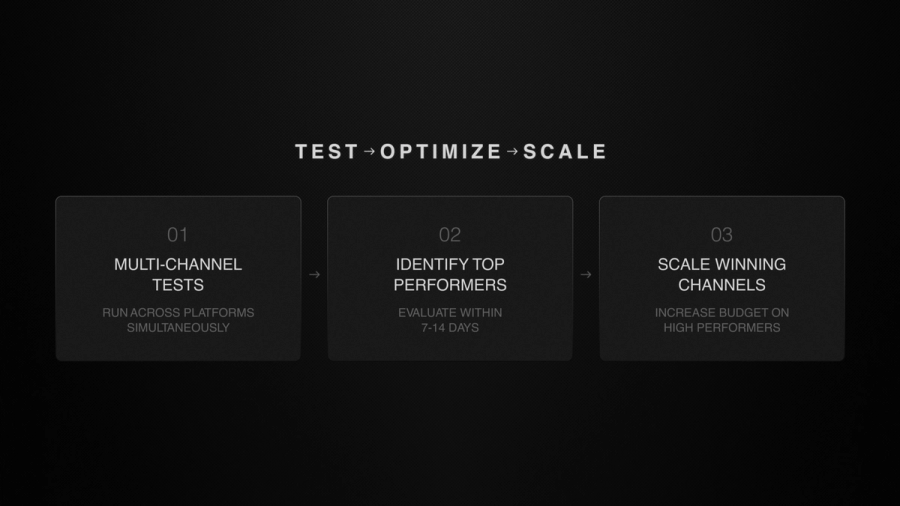
A successful crypto paid media strategy follows a test → optimize → scale approach.
Step 1: Launch Multi-Channel Tests
Run campaigns across multiple platforms simultaneously.
Step 2: Identify Top Performers
Evaluate performance within 7–14 days.
Step 3: Scale Winning Channels
Increase budget on high-performing placements while eliminating underperformers.
Common Crypto Paid Advertising Mistakes
Several mistakes consistently lead to poor performance:
- Running campaigns without tracking infrastructure
- Ignoring retargeting opportunities
- Scaling too early without testing
- Relying on restricted platforms like Google and Meta
- Using generic creatives not tailored to crypto audiences
Avoiding these mistakes improves ROI significantly.

Measuring Paid Advertising Performance
Performance should be tracked using clear, actionable metrics.
Key Metrics to Track
- Impressions
- Click-through rate (CTR)
- Cost per click (CPC)
- Conversions
- Cost per acquisition (CPA)
Weekly reporting ensures continuous optimization and better decision-making.
How AP Collective Approaches Crypto Paid Advertising
AP Collective treats paid advertising as an extension of overall growth, not a standalone channel. Campaigns are designed to amplify organic content, influencer activations, and ecosystem announcements rather than operate in isolation.
Each campaign is built with clear attribution using UTM tracking and performance analytics, ensuring visibility into what drives results. Execution follows a test-and-scale approach, starting with controlled budgets and increasing spend on high-performing channels.
This ensures paid media contributes to consistent, measurable growth instead of short-term spikes.
This keeps it:
- Crisp
- Founder-focused
- Non-salesy
- SEO-friendly
Conclusion
Crypto paid advertising is not about spending more but spending strategically.
The most effective campaigns focus on:
- Crypto-native platforms
- Strong attribution systems
- Continuous testing and optimization
- Integration with organic growth
When executed correctly, paid advertising becomes a powerful amplifier that extends reach, accelerates awareness, and supports overall ecosystem growth.